
The hugely popular animation series, 'Family Guy', has been on TV for 21 years. Those of you who are nostalgic like me, will appreciate the nuanced jokes from the 70s, 80s and 90s. Many classic films and TV programmes have been referenced in the series, including 'Happy Days', 'Road House,' 'Dirty Dancing', 'Grease', 'Back to the Future', and many others. A number of episodes are based solely on particular films, such as 'Star Wars' and 'James Bond'. The episode I will be discussing is titled ‘Three Kings’, episode 15 from season 7. Peter Griffin reads three Stephen King stories, and imagines his friends and family acting them out. However, there’s an oversight on the writers’ part, as Peter selects three books from his library, when two of King’s stories are novellas included in one collection – ‘Different Seasons’. Also, he reads a book titled ‘Stand By Me’, thus the segment is based on the film adaptation rather than ‘The Body’. The 'Family Guy' production team obtained King’s written permission to parody his stories.1. King appears, or is referenced, in a number of episodes – by name and his pseudonym, Richard Bachman.2.
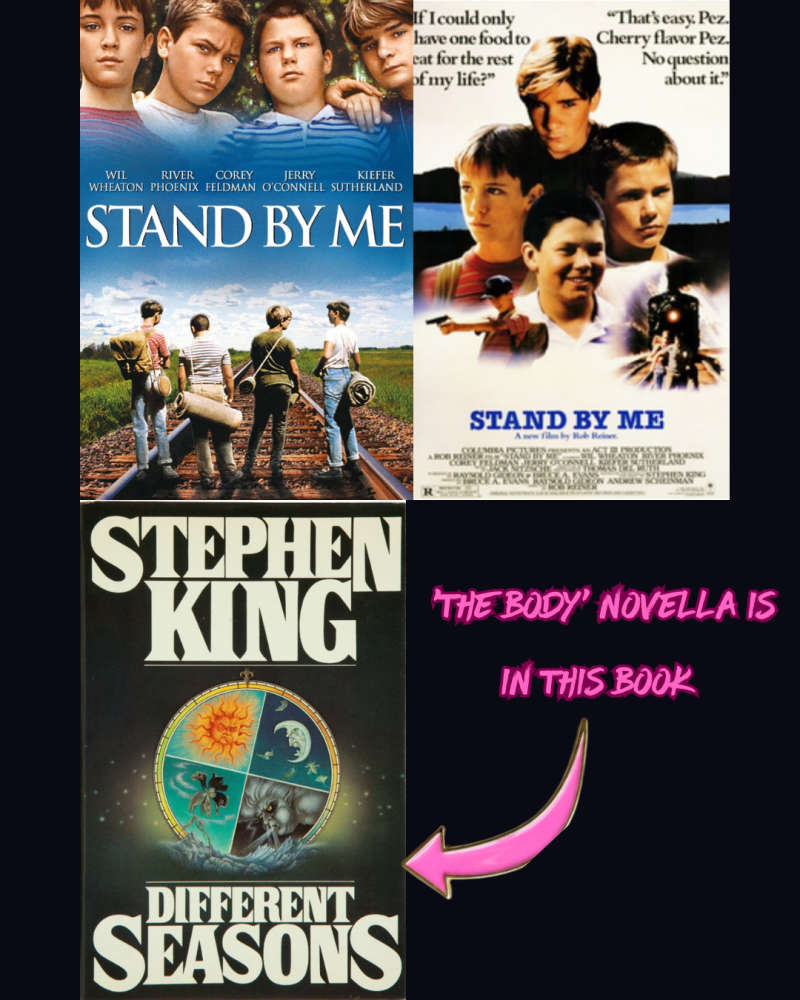
Stand By Me, directed by Rob Reiner (1986).
One difference between the novella and its adaptation, is the character who incites the standoff climax. In King’s story, Chris Chambers uses his father’s gun to defend his friends. Whereas in the adaptation and 'Family Guy', Gordie Lachance takes the gun, firing it in the air, to stand up to the bully Ace Merrill. King highlights Chris’ bravery, but the film changes this focus to Gordie’s empowerment and journey to adulthood. 'Family Guy' highlights a plot-hole in this scene – Ace could get a gun and go to Gordie’s house, since they live in a small town, to stop him from reporting the body.
Another difference is the fate of the boys. In the novella, Gordie reveals that Chris, Teddy Duchamp and Vern Tessio, all die young, therefore Gordie is the singular survivor. In the film, Chris is the only one who dies – as an adult. 'Stand by Me' shifts the narrative focus and softens the overall tone of the story, which 'Family Guy' emulates.
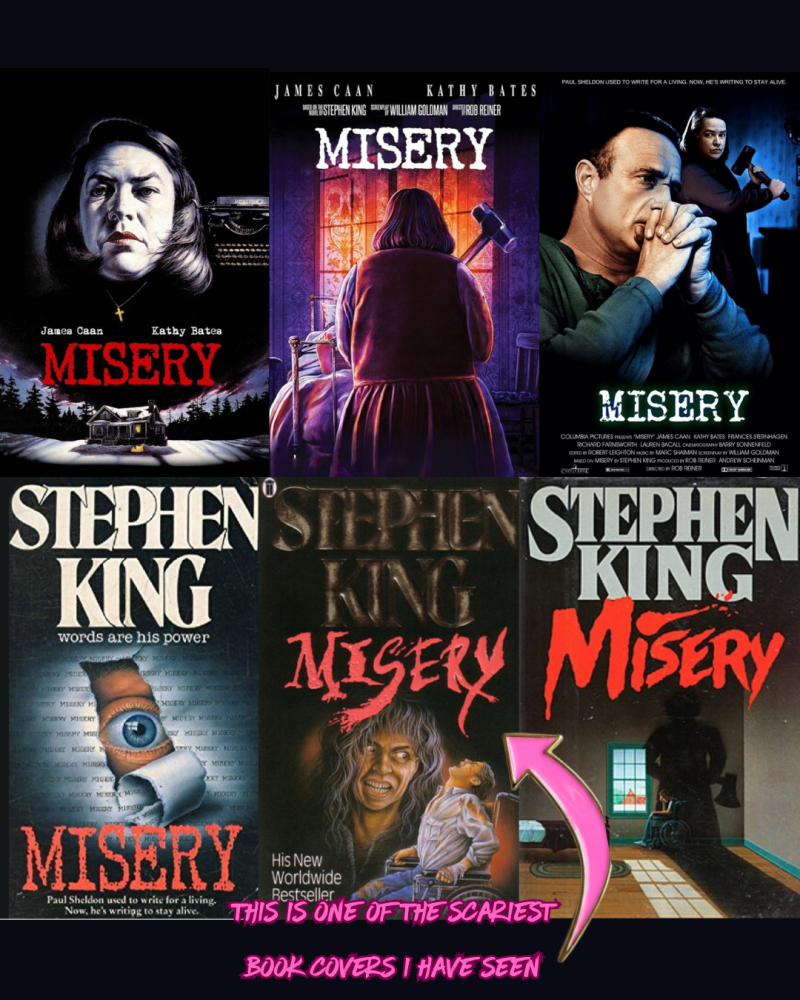
Misery, directed by Rob Reiner (1990).
The novel was published in 1987. There are numerous variations between the book and its adaptation. A major difference is the weapon used to disable Paul Sheldon. His feet are shattered by a sledge hammer in the film. This works as a horrifying scene to haunt the audience with both the visual impact of the hammer, and the audio that accompanies it. Axes have been used many times in the decades before the film was released, dampening its impact. 'Family Guy' blames the car accident Brian has when he runs Stephen King over. The real manuscript is burned in the film, whereas in the novel, it’s a stack of random papers. Which leads to another deviation – the book isn’t published in the adaptation. Also, the sheriff is killed by a shotgun to the chest in the film, but is gruesomely run-over by a lawnmower in the book. And 'Family Guy' remains faithful to the former. Annie Wilkes’ death varies in both versions. Instead of dying from a head injury while trying to find a chainsaw, the film Annie attacks Paul, who kills her with a statue. However, 'Family Guy' ends their segment with a joke between the characters.
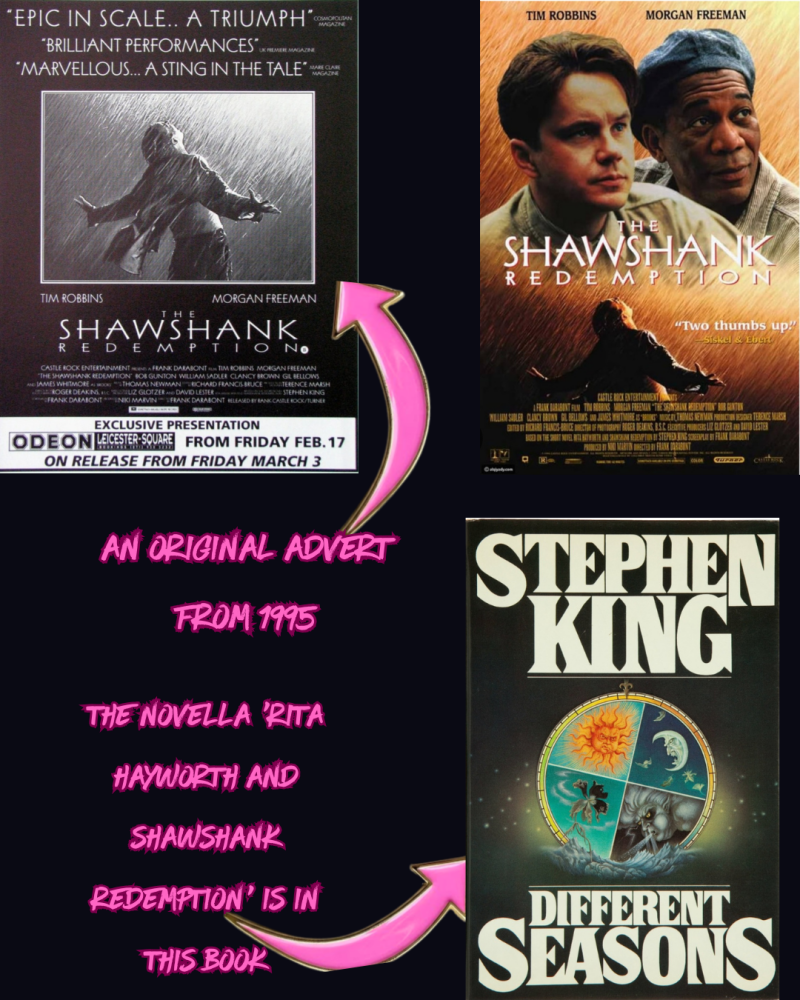
The Shawshank Redemption, directed by Frank Darabont (1994).
The novella was released in 1982, titled ‘Rita Hayworth and Shawshank Redemption’. It follows a banker, Andy Dufresne, who is wrongfully sentenced for the murder of his wife. Over three decades (the first marked by a poster of Rita Hayworth), he befriends Red, navigates prison brutality, and secretly digs a tunnel to freedom. The key differences between the story and film are the wardens, characters, and ending. The film consolidates the three wardens into one deeply malicious and psychopathic antagonist, Warden Samuel Norton, giving Andy a more personal and dramatic target for his vengeance. The character, Red, is changed from a red-headed, white Irishman, to Morgan Freeman – although there is a line which pays homage to its original story. Tommy Williams is murdered in the film, rather than being paid off, to prevent him from clearing Andy’s name. King’s story ends with Red deciding to violate his parole to see Andy, whereas the film ends with the two men reuniting on a beach.
'Family Guy' swaps the dramatic tone of the film to its own signature irreverence, mocking iconic plot holes and adding shock-value one-liners to legendary scenes. However, the events remain faithful to the adaptation, and the changes are understandable considering 'Family Guy' is a comedy series.
Although I do like the episode, the 'Family Guy' writers should clarify they are spoofing the films, rather than Peter reading from the wrong number of books.
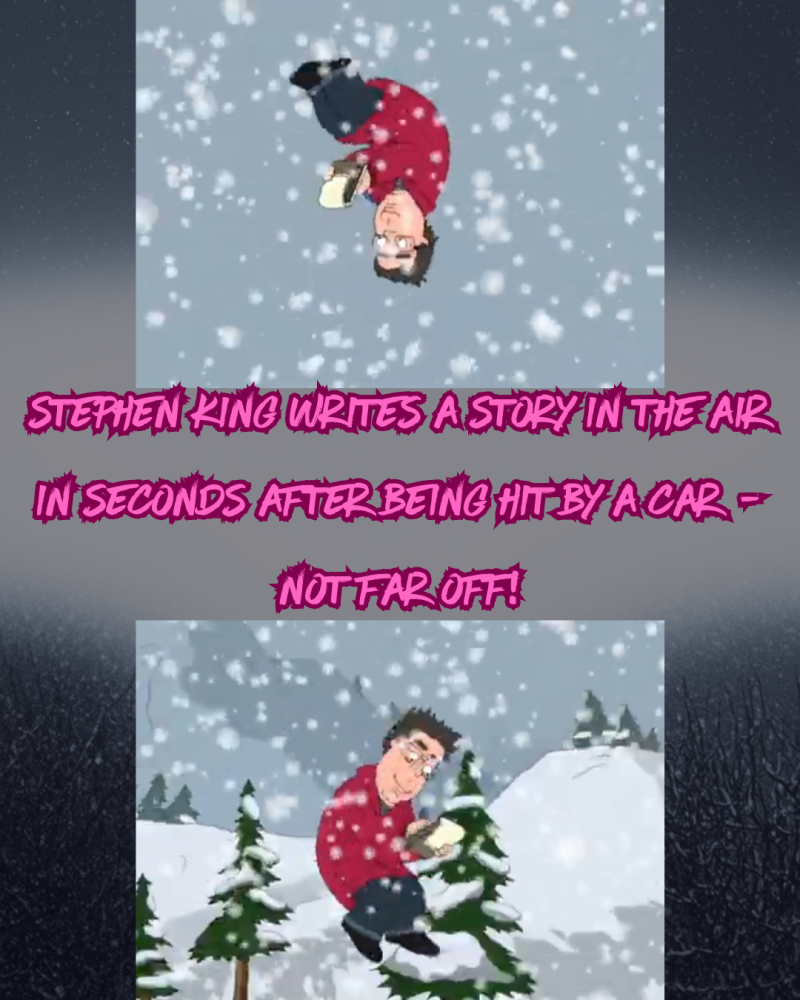
The funniest moment, for me, is the car accident. Stephen King writes a complete story while in the air, before he lands on his feet, mocking his high output.
1. Family Guy Volume Eight Audio Commentary (DVD), 20TH Century Fox.
2. ‘Brian in Love’, season 2, episode 4; ‘A Picture Is Worth 1000 Bucks’, season 2, episode 11; ‘Untitled Griffin Family History’, season 4, episode 27; ‘Not All Dog Go To Heaven’, season 7, episode 11; ‘The Book of Joe’, season 13, episode 2.
Add comment
Comments